High-end Swiss watchmaking entrusts AI with forecasting, quality control and upstream design, but reserves the final gesture for the artisan's hand alone, engraving, Grand Feu enamel, micro-engraving. Artificial intelligence handles the organization, never the gesture.
In Geneva, in the workshops of the manufactures, an arrangement is settling, tacit but firm. Artificial intelligence is gaining ground there, but within a perimeter drawn with care. It forecasts, it controls, it designs upstream. It never touches the gesture.
The division is legible. Upstream of production, AI helps simulate the behavior of a movement, anticipate the wear of a component, optimize a caliber before the first prototype takes shape. On the line, it controls quality, detects a flaw invisible to the eye, flags a tolerance breached by a micron. In the background, it organizes flows, predicts needs, sets the scheduling of the workshops. It is a role of clockmaker to the clockwork, charged with setting time and order, without ever laying a finger on the piece.
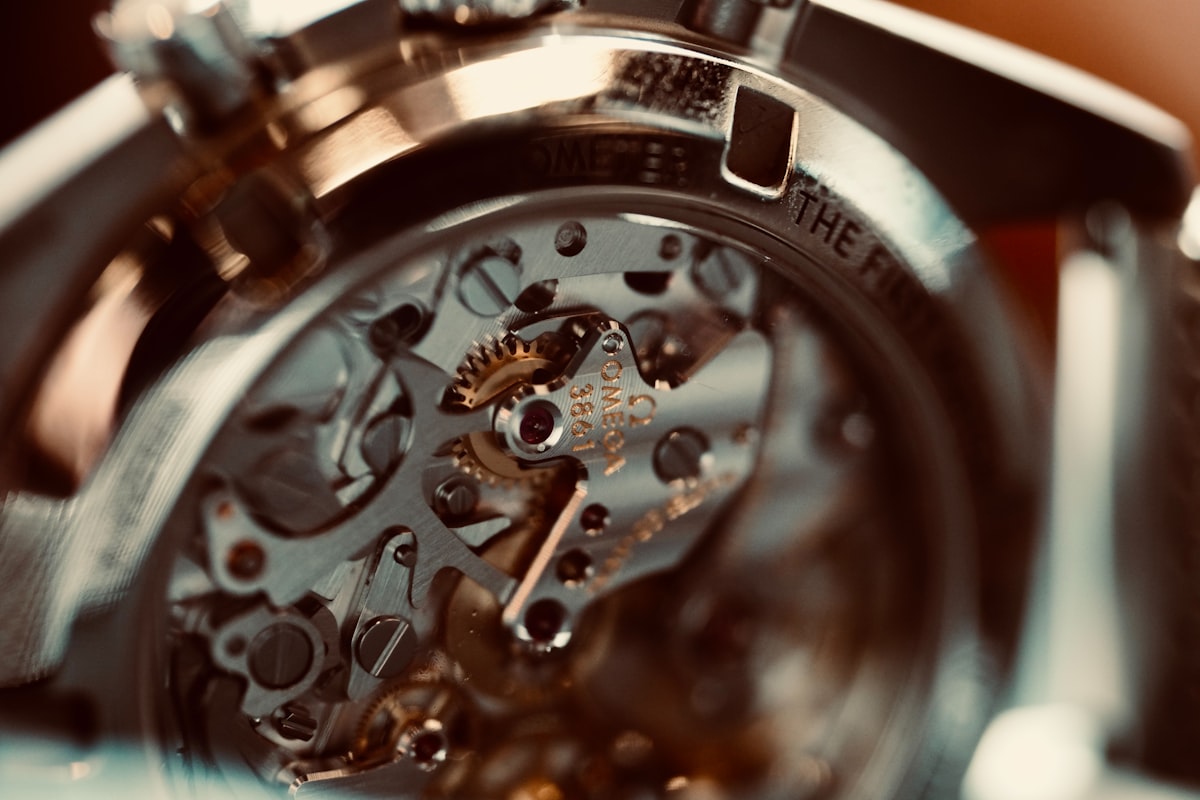
What remains to the hand is precisely what makes the value. The engraving on a dial, the Grand Feu enamel laid with a brush, the micro-engraving of a bridge, the polishing of a sharp angle. These gestures do not let themselves be coded. They rest on a sensitivity, on a memory of the finger, on an intuition of the material that no algorithm reproduces. The houses know it, and that is why they draw the line exactly there. AI stops where the irreplaceable begins.
This choice is not a refusal of progress. It is a demanding form of it. Swiss watchmaking has always integrated the machine, from the first automatic screwdrivers to the numerically controlled machining centers. Artificial intelligence belongs to that line. It takes charge of what can be taken, in order to free time, attention, availability for what cannot. The machine frees the hand, it does not stand in for it.
This posture offers a counterpoint to a question already raised elsewhere. In Dubai, in hospitality and training, one wondered about the place of AI beside a trade of service and transmission. In Geneva, watchmaking brings an answer radical in its clarity. AI never replaces the matter the hand shapes. It protects the space where that hand can still work. It sets the environment so the gesture remains possible, exact, whole.
There is a philosophy of the tool in this discipline. A tool has value only by what it preserves. A workshop where AI manages supplies and controls is a workshop where the artisan no longer loses time on what is not their art. The time they gain, they devote to engraving, to enamel, to detail. Artificial intelligence, well employed, increases the artisan's time rather than compressing it. It dilates the space of the gesture.
There is in this discipline a lesson that exceeds watchmaking. Too often, the integration of AI is thought in terms of replacement. One asks the machine to do what the human did, and one measures the gain in hours saved. Geneva proposes another metric. One asks the machine to do what is not the essential, and one measures the gain in attention preserved. The difference is capital. The first logic empties the trades. The second protects them.
For the houses, this stance becomes an argument. The client buys a piece where AI set the time, but where the hand laid the sign. They know the machine watched over the accuracy of the movement, and that an artisan engraved its dial. This duality is not a contradiction. It is a completeness. The precision of the one guarantees reliability, the singularity of the other guarantees the soul.
Swiss watchmaking, in Geneva, thus sketches a sober model of integration. Far from the talk that announces replacement, it practices distribution. AI sets the clock. The hand does the rest. And it is because the hand does the rest that the clock is still worth what it is worth.